
Bone-Conduction Headphones or Earbuds: Choose by Use Case
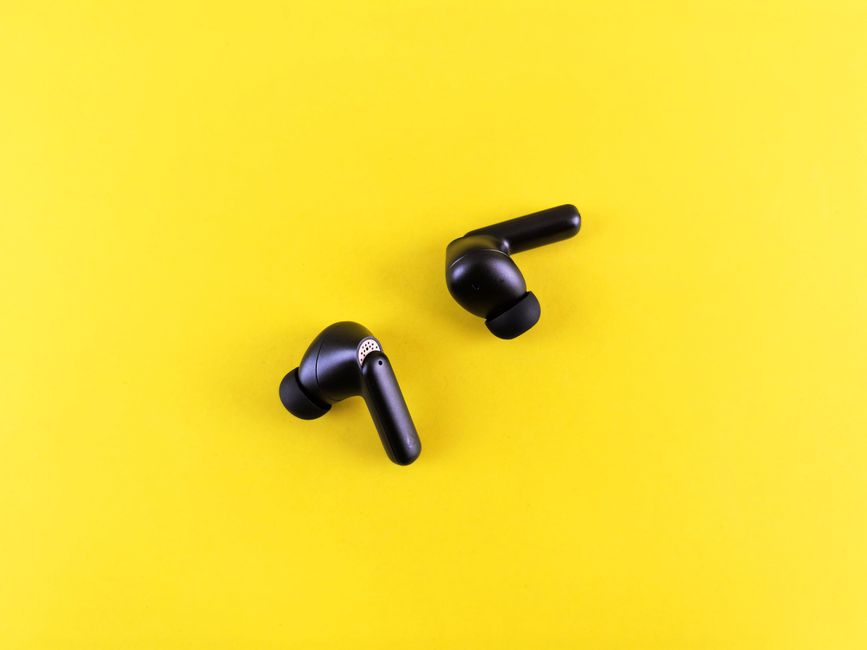
Bone-conduction headphones fit lap swimmers who need onboard music, runners who need open ears, and many glasses wearers who dislike ear-canal pressure. They fit office calls only when sound leakage and noisy surroundings are acceptable. Sealed earbuds remain the stronger choice for bass, isolation, and private listening. Water does not carry Bluetooth music reliably, so swimmers need stored files.
Do bone-conduction headphones work underwater?
Yes, bone-conduction headphones work underwater when the model is built and rated for immersion, but underwater playback depends on stored audio rather than a phone connection.
The distinction is plain. A waterproof shell keeps the hardware alive. Onboard storage keeps the music playing.
Shokz OpenSwim Pro is rated IP68 under IEC 60529 testing for submersion in up to 2 meters of fresh water under controlled laboratory conditions. Shokz states that underwater listening is limited to MP3 mode because water disrupts Bluetooth signals. Its 32 GB storage holds more than 8,000 regular-quality 4 MB songs or about 4,000 8 MB high-quality tracks, according to the manufacturer.
Suunto's 2025 Aqua guide states a 5-meter, 2-hour waterproof rating for swimming and snorkeling. It also describes offline music storage of about 8,000 songs for use away from a connected phone.
There is evidence for the listening method itself. In a randomized crossover study of 24 competitive swimmers, bone-conducted music was linked with faster 50-meter and 800-meter trials: 0.32 seconds and 6.5 seconds, respectively. The study found no statistically significant rise in measured physical enjoyment. Music can reach a swimmer. It does not turn every waterproof headset into a streaming headset.
Can I use Spotify or Bluetooth with bone-conduction headphones while swimming?
No, a phone's Bluetooth Spotify stream is not a dependable swimming setup; load compatible audio files onto the headphones before entering the pool.
Shokz states the reason without ornament: water disrupts Bluetooth signals. Its onboard mode supports MP3, FLAC, WAV, AAC, M4A, APE, and WMA files, though Bluetooth cannot transfer music files to the headset. Suunto lists the same family of offline formats in its Aqua guide.
This creates a clean buying line. A swimmer who wants a playlist beside the pool can use a phone connection before the swim. A swimmer who wants audio during laps needs a model with storage and a file-transfer routine. Public source data does not establish whether a given music subscription service permits downloadable files in a format these headsets can play.
For commuting, desk work, and calls, Bluetooth is the normal use case. For laps, storage is the bridge. Do not confuse the two.
Are bone-conduction headphones comfortable with glasses or hearing aids?
They can be comfortable with glasses or hearing aids, yet comfort and clarity depend on whether the transducers can sit in their intended place without competing with other hardware.
Bone-conduction models leave the ear canal open and rest their transducers in front of the ears. Suunto says its Aqua can be worn with a swimming cap, bicycle helmet, or beanie. That design avoids an earbud tip pressing inside the ear, which gives glasses wearers a different fit problem rather than no fit problem: the frame arms, hearing-aid parts, and transducer all share a small area.
A Trends in Hearing study found that a stimulation point near the ear-canal opening improved bone-conduction sensitivity by about 20 dB, and by up to 40 dB at some frequencies. Placement is not a minor detail. If glasses or hearing aids push the transducer away from its best position, loudness and clarity can change.
For hearing aids, public data in these sources does not establish universal compatibility. Check the physical clearance, then test speech at the volume needed for a call. A good fit is not the same as a clear signal.
Which option fits running, work, and private listening?
Choose the activity first. Then choose the compromise you can live with.
| Option | Who it suits | Cost | Key limitation |
|---|---|---|---|
| Shokz OpenSwim Pro in onboard MP3 mode | Lap swimmers who need stored audio underwater | not published | Bluetooth is disrupted by water; underwater use is limited to MP3 mode |
| Suunto Aqua with offline music | Swimmers seeking a model rated for swimming and snorkeling, plus helmet or cap use | not published | Offline music is needed when the phone is not connected, such as while swimming |
| Open-ear bone-conduction headphones | Runners, glasses wearers, and office workers who prefer an open ear canal | not published | Audio can reduce environmental sound localization; open listening can sound less full |
| Traditional in-ear headphones | Listeners who prioritize a more occluded ear-canal setup for music | not published | They create the largest occlusion effect in the cited research |
For trail running, open-ear bone conduction gives access to the outside world, not immunity from missed cues. A Journal of the Acoustical Society of America study found greater sound-localization error when bone-conduction distractor audio played than when no distractor played. Background music in spoken audio increased the error.
Suunto gives the practical warning: headphone use can affect the ability to hear surroundings. Keep the volume low. Pause audio near traffic, crossings, and crowded shared paths. Awareness is an action, not a product feature.
For office work, bone conduction works when the goal is to hear a call while keeping ears open for a doorbell or colleague. It is a poor private-listening choice in a quiet shared room. Shokz reports reduced leakage against an earlier generation, not silence.
For music-first listening, the trade is starker. A Trends in Hearing study found that condyle stimulation performed best for hearing threshold, speech intelligibility, and music sound quality among the tested positions, while temple stimulation performed worst. The same research found that occlusion with ordinary headphones improved the bone-conducted signal. Open ears buy access to the room. Sealed earbuds buy a fuller signal.
Workers weighing tools for an early shift or commute often need the same kind of clear match between gear and task found in this guide to entry-level HVAC job requirements. The right option is the one that fits the job in front of it.
Frequently Asked Questions
Do bone-conduction headphones leak sound to other people?
They can leak sound because the ear remains open and some sound reaches the air around the listener. Shokz says its OpenSwim Pro PremiumPitch 2.0 design has 50% less leakage than its own sixth-generation technology, but that is a product-specific comparison, not a universal measure. Public source data does not provide a cross-brand leakage level.
Are bone-conduction headphones safer than earbuds for running outdoors?
Open ears leave ambient sound available, yet that does not make bone-conduction headphones inherently safe for outdoor running. A controlled study found greater environmental sound-localization error whenever bone-conduction distractor audio played, with stronger effects when spoken audio included background music. Keep volume low and treat every crossing as if the soundtrack is hiding a cue.
Why do bone-conduction headphones sound weak or lack bass?
Bone-conduction sound depends on placement, fit, and whether the ear canal is open or occluded. Research found that ordinary headphone occlusion improved the bone-conducted signal, while fully open headphones produced the least occlusion effect. Sealed earbuds therefore tend to sound fuller, while an open-ear design trades that fullness for an unblocked ear canal.