
How Do I Choose a First Time Buyer Mortgage?
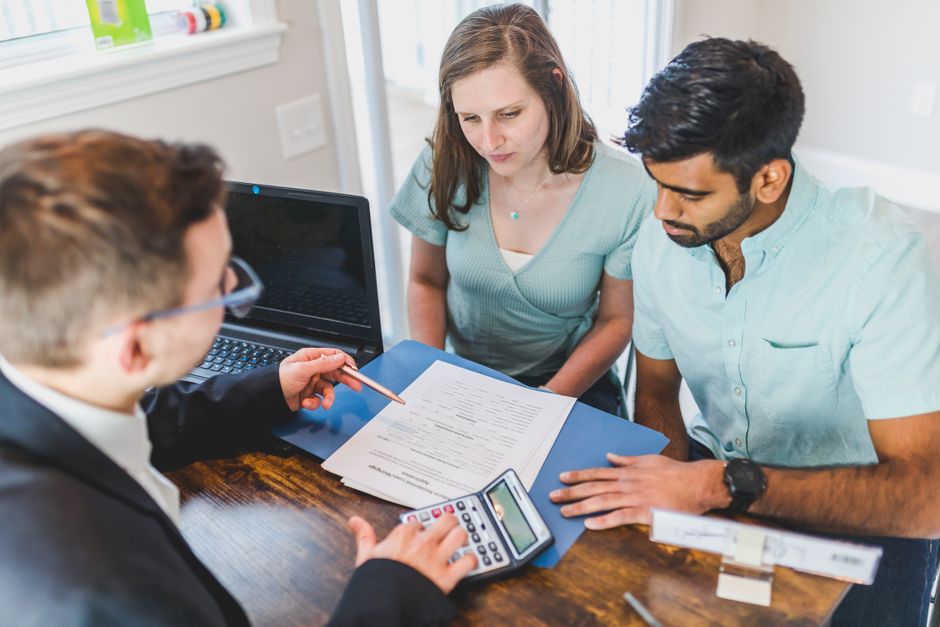
A first time buyer mortgage choice starts with comparing FHA, conventional, VA, USDA, and assistance programs against your eligibility, cash available, monthly ownership cost, and future rate risk. For a $400,000 home, documented minimum down payments can be $14,000 for FHA or $12,000 for Freddie Mac Home Possible, while eligible VA and USDA borrowers may qualify for no-down-payment financing; closing costs and reserves still require separate planning.
How much of a down payment do I need for a $400,000 house as a first-time buyer?
For a $400,000 home, the documented minimum is $14,000 with FHA financing or $12,000 with Freddie Mac Home Possible, before closing costs and prepaid items. HUD's supplied guidance, with publication year not stated, calculates FHA's 3.5% minimum as $14,000, while Freddie Mac's supplied Home Possible guidance, with publication year not stated, identifies a 3% minimum equal to $12,000.
| Program or source | Down-payment position | What still needs planning |
|---|---|---|
| FHA | As low as 3.5%, or $14,000 on $400,000, according to HUD's supplied guidance, year not stated | Closing costs, prepaid taxes and insurance, and FHA mortgage-insurance charges |
| Freddie Mac Home Possible | As low as 3%, or $12,000 on $400,000, according to Freddie Mac's supplied guidance, year not stated | Closing costs, prepaid items, income eligibility, and mortgage insurance |
| VA | No down payment may be available for eligible borrowers when the price does not exceed appraised value, according to VA's supplied guidance, year not stated | Certificate of Eligibility, lender standards, occupancy, and a possible funding fee |
| USDA | 100% financing may be available for eligible applicants, according to USDA's supplied guidance, year not stated | Income, rural-area, primary-residence, and lender requirements |
That down payment is only one line on the cash-to-close calculation. According to the Consumer Financial Protection Bureau's Loan Estimate guidance, cash to close generally includes the down payment and closing costs, less deposits, seller credits, and other adjustments. It can also include prepaid taxes and insurance, lender charges, points, and mortgage-insurance costs.
Run the calculation in this order: start with the program's required down payment, add the full closing-cost estimate and prepaid items, subtract documented credits or assistance, then preserve a separate emergency reserve. A lender's approval does not tell you how much cash should remain after closing.
What is the best type of mortgage for a first-time buyer?
The best type of mortgage depends on which program fits your eligibility and produces the most workable total cost, not simply the smallest down payment. Compare FHA, conventional, VA, USDA, and assistance options side by side before choosing.
- FHA: HUD says FHA-insured mortgages can offer low down payments, low closing costs, and flexible credit qualification. The trade-off is that the $14,000 FHA example still requires budgeting for FHA mortgage-insurance charges, closing costs, and prepaid items.
- Conventional 3% options: Freddie Mac Home Possible can require as little as 3%, or $12,000 on a $400,000 home. Freddie Mac says qualifying income is generally limited to 80% of area median income, with eligibility verified through its tools or underwriting system; homeownership education is required when all borrowers are first-time buyers.
- VA: Eligible borrowers may obtain no-down-payment financing when the sales price does not exceed the appraised value. VA says private mortgage insurance and FHA mortgage-insurance premiums generally are not required, but a one-time funding fee may apply and can generally be financed or paid at closing.
- USDA: Eligible applicants may receive 100% financing for a primary residence in an eligible rural area. USDA's supplied guidance, year not stated, generally limits household income to 115% of median household income and does not set a USDA credit-score requirement, although lenders can impose additional standards.
- Assistance programs: Freddie Mac identifies family gifts, employer-assistance programs, secondary financing, and sweat equity as possible Home Possible funding sources. Each source needs documentation, and assistance can affect the structure and cost of the transaction.
Use the CFPB comparison method: request multiple Loan Estimates and compare origination charges, lender credits, points, rate type, mortgage insurance, and estimated cash to close. A lender credit may reduce closing costs but can be linked to a higher interest rate, so compare the combined cost rather than celebrating one lower fee.
If a rent-to-own arrangement is part of the decision, review the agreement separately from mortgage qualification; the practical questions in What Should I Check Before Signing a Rent-to-Own Home Agreement? address a different contract and different risks.
How hard is it for a first-time home buyer to get a mortgage?
Getting a mortgage is mainly a documentation and qualification exercise: the lender evaluates income, debts, credit, down-payment funds, the property, and the selected program. Meeting a minimum credit standard is not the same as receiving the best pricing, because lenders also compare the overall application and loan structure.
Use this approval checklist before applying:
- Confirm first-time-buyer status and program fit. Check whether the selected option has income, occupancy, property-type, rural-area, veteran, or education conditions.
- Build the document packet. The CFPB says a typical packet includes pay stubs from the last 30 days, W-2 forms for the last two years, signed federal tax returns for the last two years, two recent bank statements, proof of down-payment funds, identification, and a Social Security number. These time periods come from the CFPB's supplied guidance, year not stated.
- Explain unusual income or funds early. Self-employed borrowers and borrowers with irregular or nonwage income may need extra documentation. Gifted down-payment funds may require a signed donor statement confirming that the money is a gift.
- Keep the file current. Incomplete or inaccurate documents can delay approval or lead to rejection, and lenders commonly request updated pay stubs and bank statements.
- Compare lenders after preapproval. Ask each lender for a Loan Estimate and compare the same purchase assumptions. This makes the rate, fees, credits, mortgage insurance, and cash requirement easier to evaluate.
What is the 3-3-3 rule for buying a house?
The supplied primary sources do not define an official “3-3-3 rule” for buying a house, and they do not present it as a mortgage-qualification standard. Treat the phrase as an informal prompt to verify the three areas that control the transaction: program eligibility, total cash to close, and sustainable monthly ownership cost.
For the first check, match the buyer and property to the program. VA requires eligibility, lender approval, and owner occupancy; USDA requires an eligible rural property, income eligibility, and primary-residence occupancy; FHA and Home Possible have their own qualification and property conditions.
For the second check, use the Loan Estimate rather than a headline rate. For the third, rebuild the monthly figure by adding principal and interest to property taxes, homeowners insurance, mortgage insurance, escrowed costs, HOA dues, maintenance, and possible future rate risk. The CFPB specifically notes that total monthly payment is typically higher than principal and interest alone.
What credit score do I need for a first-time buyer mortgage?
The supplied sources do not establish one universal credit-score minimum for every first-time buyer mortgage. FHA is described by HUD as offering flexible credit qualification, USDA states that it has no USDA-set credit-score requirement, and Freddie Mac and VA materials still leave room for lender underwriting standards.
That does not make credit irrelevant. Lenders review the complete file, including documented income, existing debt, payment history, funds, property, and loan program. Ask each lender to explain both the minimum qualification standard and the pricing tier that applies to the actual application.
Use a clean comparison script: “Please provide the Loan Estimate, origination charges, credits, points, mortgage-insurance cost, rate type, and estimated cash to close for the same purchase assumptions.” The CFPB's guidance says, “Request multiple Loan Estimates from different lenders so you can compare and choose the loan that's right for you.”
Frequently Asked Questions
Do I have to put 20% down on my first home?
No. The CFPB says mortgage insurance is typically required below 20% down, but the exact requirement varies by loan type. HUD describes FHA financing as allowing a down payment as low as 3.5%, while VA and USDA programs may permit eligible buyers to purchase with no down payment.
Can I qualify for a first-time buyer mortgage with student loans or a high debt-to-income ratio?
The supplied sources do not provide a universal student-loan or debt-to-income cutoff. Approval depends on the lender's standards, documented income, existing obligations, credit profile, program rules, and the property's eligibility, so the same debt can produce different outcomes with different lenders.
What documents do lenders need for first-time buyer mortgage preapproval?
The CFPB lists pay stubs from the last 30 days, W-2 forms for the last two years, signed federal tax returns for the last two years, two recent bank statements, proof of down-payment funds, identification, and a Social Security number. Self-employed borrowers or people with irregular income may need additional documentation.
Are there first-time buyer mortgages with zero down or government assistance?
Eligible VA borrowers may qualify for no-down-payment financing when the sales price does not exceed the appraised value, and eligible USDA borrowers may receive 100% financing for a qualifying rural primary residence. Other assistance can come through programs such as employer assistance, family gifts, secondary financing, or local programs, but eligibility and documentation vary.
How much cash do I really need for closing on a $400,000 home?
The CFPB defines cash to close as generally including the down payment and closing costs minus deposits, seller credits, and other adjustments. On a $400,000 purchase, the documented minimum down payment is $14,000 for FHA or $12,000 for Freddie Mac Home Possible, but the final amount also includes closing costs, prepaid taxes and insurance, loan charges, and any required mortgage-insurance or program fees.
Sources
- Consumer Financial Protection Bureau: Create a Loan Application Packet
- Consumer Financial Protection Bureau: Loan Estimate
- U.S. Department of Housing and Urban Development: FHA Loans
- U.S. Department of Veterans Affairs: Purchase Loan
- USDA Rural Development: Single Family Housing Guaranteed Loan Program
- Freddie Mac: Home Possible Mortgage
Disclaimer: This article is for general information only and is not financial advice. It does not take your personal circumstances into account, and past performance does not predict future results. Speak to a licensed financial professional before making money decisions.
You may also like

What Should I Expect at My First Senior Speed Dating Event?
A practical first-event guide to senior speed dating, from timed conversations and match sheets to etiquette and safety.

How Do I Choose Health Insurance When I Retire Before 65?
Compare COBRA, Marketplace, spouse-plan, and part-time coverage while budgeting for premiums, care costs, and income-driven ACA credits.

How Do I Choose an East Coast Small Town to Relocate To?
Compare housing, climate risk, jobs, care, walkability, and off-season life before relocating to an East Coast small town.

Bone-Conduction Headphones or Earbuds: Choose by Use Case
Choose bone-conduction headphones or earbuds for swimming, running, work, glasses, and private listening using sourced trade-offs.